
Susan was startled when the man in the plaid shirt appeared.
She was lingering by the bookstore where she and Jeff used to browse the titles, sharing a passion with the look and feel of second-hand books, something not everyone could understand. But suddenly at her elbow was the man in the plaid shirt, with a shy but provocative smile, standing where Jeff used to stand, perusing books as Jeff might, seeming almost to fill his shoes.
“There’s nothing like an old, weathered, well-thumbed volume,” he told Susan, with such sincerity that she doubted him somehow, as if he was mimicking her passion instead of truly feeling it. “The Adventures of Sherlock Holmes,” he said, eyeing the cover. “Did you know Holmes was based on a real-life person?”
“Joseph Bell,” she said promptly, “a surgeon in Edinburgh. He could deduce your symptoms, just by looking at you.”
He nodded. “Conan Doyle worked for him, and made him a fictional detective. Got him on the boss’ good side.”
“Who are you?” Susan asked.
“Just someone who likes to read.”
Not inherently suspicious, she thought, finding a random bystander with Holmesian insights. The problem, if it was really a problem, was that Jeff had exactly the same interest, including Holmes’ origin, and it was odd to meet a stranger who shared that.
“My friend Jeff was also a Holmes fan,” I tell him.
“He was a smart man. I’m Marty, by the way. Jeff’s friend, he asked me to meet you.”
“Susan.” Dutifully she shook his hand, a new friend she should probably welcome, because she didn’t make friends easily. The problem – she couldn’t help noticing – was that he’d referred to Jeff in the past tense, saying “he was a smart man,” as if it were no longer true.
A grammatical slip? A misheard remark? Or something else?
“Is Jeff coming?’ she asked.
“Afraid not,” Marty said. “Let’s grab a bite together, I’ll explain.”
“I’d, uh…okay.”
She said this half-heartedly – she was suspicious, not enraptured. But if he really knew Jeff, he could shed light on why her would-be boyfriend hadn’t met her as promised.
“Lead the way,” she said.
She kept thinking about Jeff, with his bottle-bottom glasses and brownish, unkempt hair. He was a loner, just like Susan. Accustomed to being alone, never mastering the social skills that most take for granted. Eating alone, seeing movies alone, strolling the park alone – with the mechanics of popularity always out of reach. It seemed such a miracle when they first met in the bookstore, reaching for the same book at the same time: a rare edition of Tom Sawyer Abroad, where Tom and Huck take a hot air balloon to Africa, visiting the pyramids. Not Mark Twain’s best work, but for purists it was a must-read – a passion shared by Jeff and Susan both, as they soon learned.
Neither were social, disdaining company, preferring simple self-reliance. Which is why it was so startling to find each other, two people united by their lack of other friends – a mutual attraction that both found surprising.
They went on long walks together. She showed him her favorite hobby, stair-climbing, up and down some of the Big Apple’s tallest buildings. “You know you’re in shape when you get to, say, floor 50 of the Empire State Building, and find yourself clamoring for more.” Jeff struggled to keep up but he manfully persevered, matching her step for step – until collapsing on floor 17, from sheer exhaustion. They took the elevator back down, which she didn’t hold against him.
She loved that he tried, that he wanted to share her passion. Or seemed to, in those first few days of excitement and discovery. Sadly, though, after a couple of weeks he seemed to withdraw, to reconsider, not sure he really wanted to share his very private life.
“I need time,” he said. “To think this over. To decide if this is what I really want.”
Disappointed but hopeful, Susan suggested they make a date, agreeing to meet in one month’s time – at the bookstore where they first met, hopefully ready to take a step forward, to see where their off-beat relationship might lead.
But instead of Jeff, she was met by Marty.
Who knew more than he was letting on.
***
Dougie’s Doggies had some tasty wieners, featuring “mouth-watering tube steaks” with a variety of savory selections. Susan had a spicy kraut dog, while Marty had a blazing-hot chili dog with pickle slices and a squirt of mustard. They sat on wood benches under patio umbrellas, and spoke over the occasional traffic noise.
“So Jeff was your friend?” Marty asked. Again with the past tense, wish he’d stop doing that. Susan composed herself before answering.
“More than that,” she said. “At least, I hope so. It remains to be seen.”
“I’m afraid I have bad news,” he said, pausing to wipe a smear of mustard from his mouth. “Jeff decided not to meet you, he wasn’t comfortable with your arrangement. That’s why he sent me instead…to let you down gently.”
Susan winced at the news, but not just from disappointment. Because he didn’t seem sincere – or rather, he seemed too sincere, as if delivering lines from a script, rather than telling the simple truth. And his next words didn’t improve things.
“But I’m here for you, Susan,” he said, taking her hand. “However I can help, either to listen or just provide company, I’m here.” He gripped her hand, a little too tightly, seeming to suggest himself as a replacement for Jeff, a sort of consolation prize. Gently she disengaged her hand.
“I need some time to deal with this,” she said, which was certainly true.
“Take my card,” he said, pressing it into her palm. “Call me whenever you like.” And he smiled that sympathetic smile again, personal-seeming but subtly suspicious.
She glanced at his card. MARK TRASK / Personal Consultant, with an 800 number and the image of an eclipsed moon.
They finished eating. Susan insisted on paying her own tab, handing over a Mastercard before Marty could intervene. Back on the sidewalk, Marty laid a hand on her shoulder as if to provide comfort, holding just a little too long, and called her a taxi.
“Hope to hear from you,” he said, as her cab pulled away.
Back in her third-floor walkup apartment, Susan kicked off her shoes and sprawled on her comfy sofa, gazing out the window with its scenic view of the apartment next door. Its residents were seldom home, and tonight was no exception. She wondered about Marty, what his story was, what he really wanted, why he’d befriended Jeff and now her, two classic introverts not usually in demand.
And why Jeff was suddenly past tense.
She thought hard, pondering Marty’s likely motives, and a terrible narrative slowly emerged. Suppose – not saying this was true, but just suppose – that Marty was a very bad man. The worst kind of man, a man who killed, not from necessity but for the sheer thrill of it, the dark pleasure of watching someone die at your hands.
But suppose he was careful, fearful of being caught, afraid of punishment for crimes that would demand solving. Unless the people he killed were likely to go unnoticed, outside the social mainstream, disappearing without attracting attention.
Social introverts. The perfect target.
No close friends, no one to miss them, nobody cares. No one clamors for their murder to be solved. Just another nameless nobody, flying under the radar. Unless…they’re not as isolated as they seem.
Because suppose, just suppose, some outcast found another outcast with a shared interest in weird facts, literary tropes, and a strange attraction was formed. But this guy chased away his would-be girlfriend, having them take a month apart, meaning she wasn’t around for the stalking that followed. Maybe Marty only learned of her as Jeff was dying – breaking his cardinal rule about isolated victims.
Unless he killed the girlfriend too, leaving no one left to complain.
Susan felt a sudden chill. This line of reasoning – purely speculative, but with a chilling resonance – meant she could be in deadly danger, from the man who (perhaps) had killed Jeff already. But if she was Martin’s victim-to-be, why let her go so easily? How did he know he could find her again?
He couldn’t. Unless…
Susan yanked open her purse, emptying its contents onto the coffee table. The same purse she’s used to pay for her kraut dog, opening it right in front of Marty. Where with some sleight-of-hand he could slip in something unseen, later used to find her –
There it was, on the coffee table: a small round ball, about the size of a marble, unmarked and nondescript, its purpose scarily obvious.
A tracking device.
Meaning, he knew where she was. He could get to her. Not easily, he’d have to enter her security-monitored apartment building and penetrate her double-locked door. But nothing was impossible to someone resourceful and determined. What if he disabled the front camera, disallowed intruder alerts, and pried open her door locks?
Susan wondered what to do, how to convince anyone of this frightening but purely theoretical scenario. How to raise the curtain of disinterest that Marty had so expertly woven around his outcast victims.
She was still wondering when Marty pounced from behind.
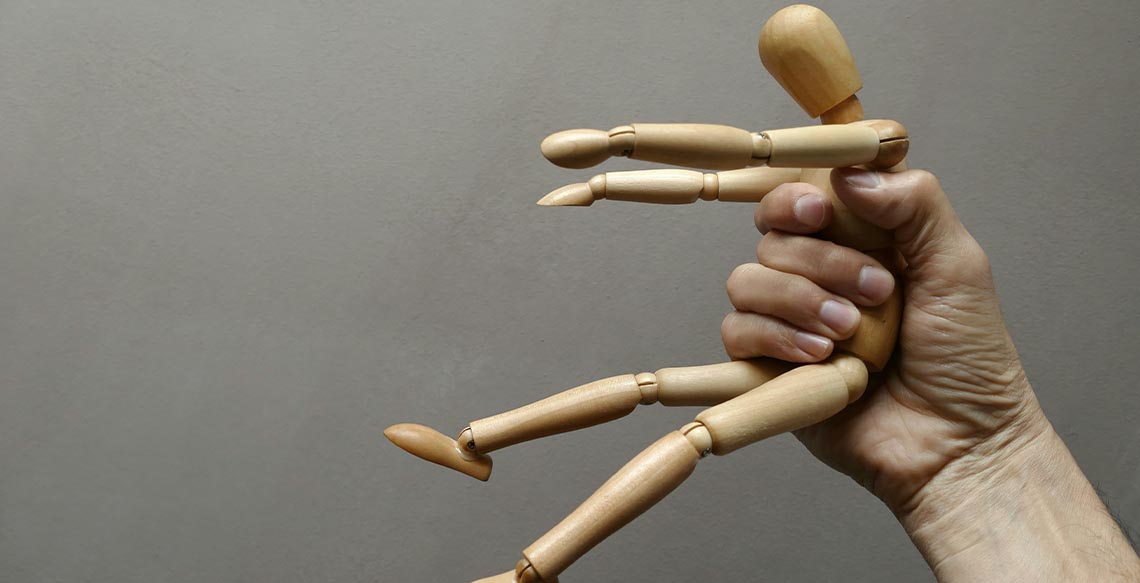
No sound, no warning, he was on her in an instant, wrapping a nylon stocking around her neck – she could feel it, with grasping fingers – and knotting it tight, painfully tight, beginning her strangulation. Bad news, because once blood flow to the brain was obstructed, unconsciousness followed in seconds.
“Tell Jeff I said hi,” said Marty, turning her to face him, grinning cruelly.
Game over, she thought, futilely clawing at the nylon. No way could she free herself before her consciousness faded from oxygen starvation. The last thing she’d see would be his face, angrily triumphant, sneering with contempt, watching her die.
Her fingers felt something under the nylon. Small and hard and round, pressed tightly against her neck. Two of them. It made no sense until suddenly she understood, based on one of those weird facts that she and Jeff used to dwell upon.
In one of those true crime stories, the killer wanted their victim to suffer as much as possible – and strangulation wasn’t good enough. The victims blacked out too soon, from blood loss to the brain. But if the carotid arteries were protected – by the simple expedient of duct-taping coins to the nylon, where the arteries would be – the blood would flow unobstructed, keeping the victim alive under she suffocated, a much more painful death.
Marty was doing that now. It’s why she was still alive. Death would depend not on cranial blood flow, but on how long she could hold her breath.
Which meant she had a chance.
Her mind was racing. Experts say deprivation survival time is “three, three, three” – three weeks without food, three days without water, there minutes without air. And for the average person, that was true. But one of Susan’s hobbies was stair-climbing, a brutal hobby that toughened her stamina, which meant she could hold her breath longer than most.
The trick was to convince Marty she was dying.
Susan thrashed and flailed, as if panicking, but she was really just play-acting, a bit of theater to make her look worse than she was. Marty’s smile seemed to deepen, gratified by her panic, cherishing the fright he was inducing. Enjoy it, she thought, planning her next, desperate move.
Gradually, she stopped struggling. Her flailing grew weaker, half-hearted, as if from the oncoming lack of consciousness. She closed her eyes, seeming to feel nothing now, though her lungs were starting to hurt, starting to burn, as their limit came closer.
Then Susan twitched suddenly, as if experiencing one last death-throe, a final convulsion before dying. She did this because she’d once taken her cat Pebbles, poor cancer-stricken Pebbles, to be euthanized, and they’d given her a supposedly painless injection – but in the moment of dying Pebbles has spasmed, a final death twitch, just as Susan was doing now. Drawing on that sad memory to make her performance more convincing.
He bought it. Marty actually bought it. He let go of her, as one might drop a sack of garbage, no longer worthy of his concern. But he wouldn’t be fooled forever, and Susan’s lungs were on fire, and in one swift motion she balled her fist and slammed it into his Adam’s apple, the worst place to hit someone, painful and disabling, leaving him gasping and clutching his throat.
Susan scrambled into the kitchen and grabbed a steak knife from its wooden block, cinching it under the nylon, severing it, breathing in great gulps of precious air. I’m alive, she thought, but couldn’t spend much time on self-congratulation because Marty was still here, and still dangerous, even if he was in terrible pain.
Easy enough to fix. She took a cast-iron skillet into the living room, where Marty was struggling to his feet, and smashed it full-force into the side of his head. He fell face-first onto the carpet, unconscious.
Problem solved, she thought, shuddering at how close she’d come to dying – from the cardinal sin of carelessness, letting the wrong man get too close, under the pretense of caring. She should never take that risk again.
But sometimes, a part of her argued, as her breath returned and her pulse stopped pounding, sometimes it’s worth the risk. Jeff had been worth it, with his charming but awkward affection, before this cruel strangler had taken his life. They might have been happy together. Mister Right and Mr. Oh-So-Wrong, two opposite extremes in rapid succession.
Was it better to take a chance, or play it safe?
The answer was beyond her, an impossible choice. But perhaps, she thought, turning it over in her mind, perhaps this dilemma is an opportunity for growth.
Whatever that might mean.
She pulled out her cell phone and dialed 911, reporting her assault and its surprising outcome. But before the cops arrived, she couldn’t resist giving Mr. Not-So-Wonderful another clout with the frying pan.
[Image Credit : Photo by Marco Bianchetti on Unsplash]


 by
by 

Terry Black
Latest posts by Terry Black (see all)
- The Pretense of Caring - May 10, 2026
Short, thrilling, fulfilling. This was very well written. I liked the way main character’s thinking was written. Shouldn’t there have been ‘ “My friend Jeff was also a Holmes fan,” she tells him’ instead of ‘I tell him’?